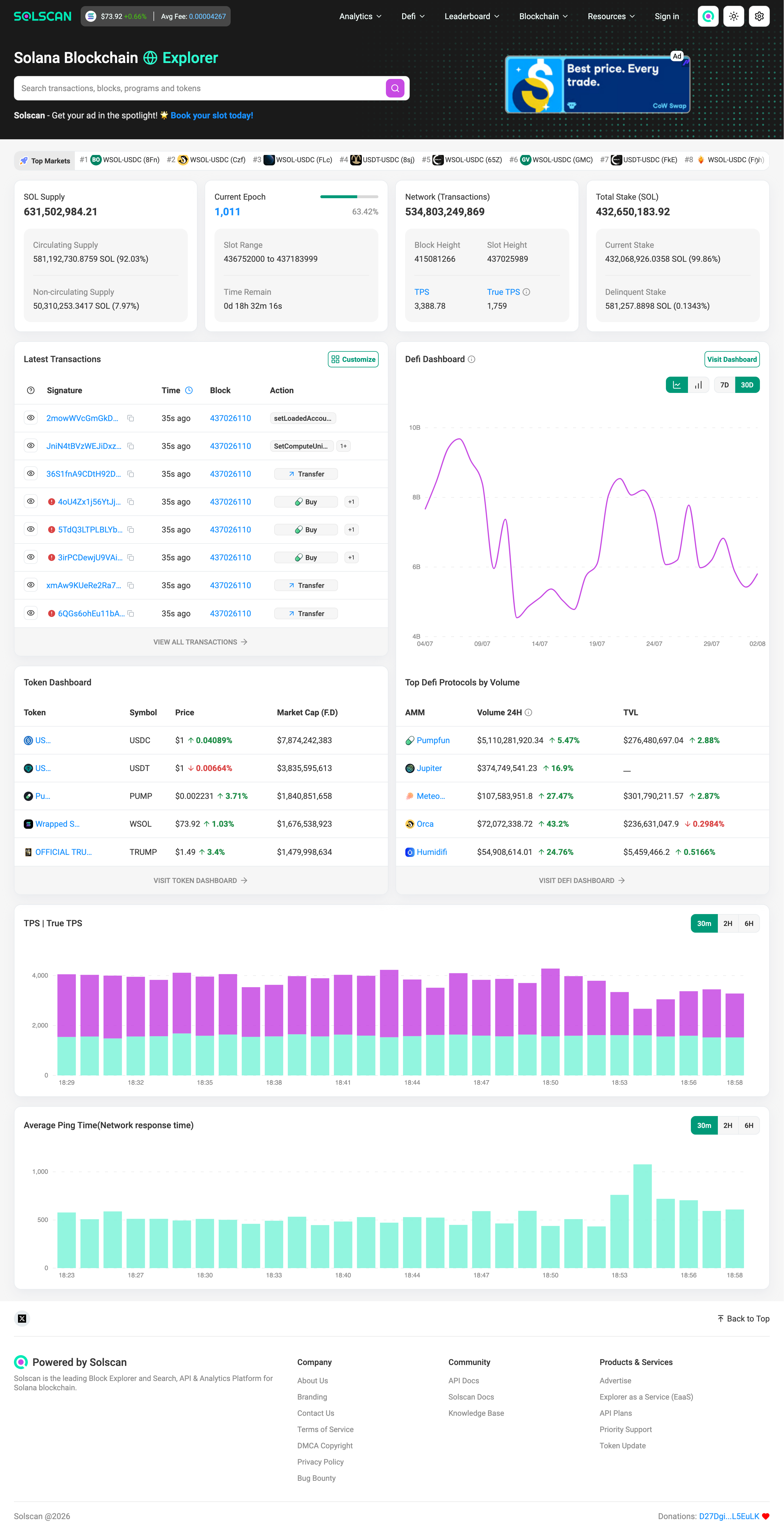
Solscan is a blockchain explorer designed for the Solana network. It allows users to search and analyze publicly available blockchain data, including transactions, wallet addresses, tokens, accounts, blocks, and smart-contract activity.
For anyone using Solana, Solscan can be a useful tool for verifying transactions, investigating wallet activity, tracking token transfers, and understanding what is happening on the network.
What Is Solscan?
Solscan is a blockchain explorer that provides a user-friendly interface for viewing activity on the Solana blockchain. Instead of interacting with raw blockchain data directly, users can enter a wallet address, transaction signature, token address, or other identifier to find relevant information.
The platform is useful for both beginners and experienced crypto users. A beginner might use Solscan to confirm whether a SOL transfer was completed, while a developer or researcher may use it to examine transactions, accounts, programs, and token activity.
How Does Solscan Work?
Solana records transactions and other network activity on its public blockchain. Solscan indexes this information and organizes it into searchable pages.
When you search for a Solana address or transaction, Solscan can present information such as:
Transaction status
Sender and recipient accounts
SOL transferred
Transaction fees
Block or slot information
Token transfers
Account activity
Program interactions
Transaction instructions
This makes blockchain data easier to read and analyze without requiring users to operate their own blockchain infrastructure.
Checking Solana Transactions
One of the most common reasons people use Solscan is to check a transaction.
When a Solana transaction is submitted, it receives a unique transaction signature. Entering this signature into Solscan can provide information about the transaction and help users determine whether it was processed successfully.
A transaction page may show the accounts involved, the amount transferred, transaction fees, block or slot details, and the instructions executed during the transaction.
This can be particularly useful when a wallet transaction appears delayed or when a user wants to independently confirm that funds reached the intended address.
Exploring Wallet Addresses
Solscan allows users to search public Solana wallet addresses and examine their on-chain activity.
Depending on the address, users may be able to see SOL balances, token holdings, transaction history, transfers, and interactions with Solana programs.
Because blockchain information is publicly accessible, wallet activity can be analyzed without knowing the private key controlling the address.
However, a public wallet address should not automatically be assumed to belong to a particular person or organization. Blockchain addresses are generally pseudonymous unless their ownership has been publicly established.
Viewing Solana Tokens
Solscan can also be used to explore tokens on the Solana network.
Users can search for a token address to investigate information such as token transfers, holders, supply-related information, and associated on-chain activity.
This is useful when verifying a token's contract or mint address. It can also help users distinguish between tokens with similar names.
A token's presence on Solscan does not, by itself, establish that the token is legitimate or safe. Users should verify token addresses through trusted project sources before purchasing or interacting with unfamiliar assets.
Understanding Solana Transactions and Fees
Solana transactions require network fees. Solscan displays fee information associated with transactions, allowing users to see how much was paid for a particular operation.
Transaction details can also reveal the instructions and programs involved. This can help advanced users understand why a transaction occurred and which applications or protocols were involved.
For developers, this information can be especially valuable when troubleshooting failed transactions or examining how a decentralized application interacts with the Solana network.
Solscan for Developers
Solscan is useful beyond simple transaction tracking. Developers can use blockchain explorers to investigate program interactions, account changes, token transfers, and transaction instructions.
When debugging a Solana application, examining a transaction on Solscan can provide clues about where an operation succeeded or failed.
Developers and researchers can also use blockchain data for analytics, monitoring, and investigating activity across the network.
Is Solscan Safe to Use?
Solscan is primarily a blockchain data explorer, meaning users can generally browse public blockchain information without giving the explorer control over their cryptocurrency.
However, users should still follow basic security practices.
Never provide a website with your wallet's private key or recovery phrase simply to view blockchain information. A blockchain explorer does not need your seed phrase to display a public transaction or address.
Users should also be cautious when interacting with external websites, signing wallet transactions, or approving token operations based on information found through a blockchain explorer.
Why Is Solscan Important?
Blockchain networks make transaction information publicly verifiable, but the underlying data can be difficult to interpret. Solscan helps make Solana's public blockchain data more accessible.
It can be used by:
Crypto users to verify transactions and transfers
Traders to investigate token and wallet activity
Developers to examine program interactions and troubleshoot transactions
Researchers to analyze blockchain activity
Businesses to monitor on-chain transactions and accounts
By providing searchable and organized blockchain data, Solscan makes it easier for users to understand activity taking place on Solana.
Solscan vs. a Crypto Wallet
A blockchain explorer and a cryptocurrency wallet serve different purposes.
A wallet is primarily used to manage blockchain accounts and sign transactions. Solscan, on the other hand, is primarily used to view and analyze blockchain information.
For example, you might use a wallet to send SOL and then use Solscan to verify that the transaction was successfully processed.
This distinction is important because simply searching for an address on Solscan does not give you control over that address.
Conclusion
Solscan is a valuable tool for exploring and understanding the Solana blockchain. It provides access to information about transactions, wallet addresses, tokens, accounts, fees, and program interactions through a searchable interface.
Whether you are checking a recent SOL transfer, researching a token, monitoring a wallet, or debugging a Solana application, Solscan can provide useful on-chain information.
As with any blockchain explorer, however, the information displayed should be interpreted carefully. Solscan shows blockchain data, but it does not guarantee that a token, wallet, project, or transaction is trustworthy. Combining blockchain exploration with independent research and strong wallet-security practices is the best way to use the platform effectively.

HTML Website Builder